
Common Fence Problems Caused by Washington Weather
A homeowner in Lacey called us in January. Her fence had stood tall in October. By New Year’s, a section along the back had tipped toward the neighbor’s yard. Two gate hinges had pulled loose. Boards near the ground felt soft.
She hadn’t done anything wrong. She just lived through a Washington winter.
Rain, wind, and soggy ground do real damage to fences. Most of it follows the same patterns. Once you know them, you can spot trouble early and fix it before it grows.
Why Washington Weather Is Hard on Fences
Olympia gets about 50 inches of rain each year. Most of it falls from October through April. Wind storms roll in off the Pacific. Then summer turns dry and warm.
That mix stresses a fence in two ways. Winter soaks it. Summer dries it out. Each swing wears on the materials a little more.
Here are the problems we see most.
Rotting Posts and Boards
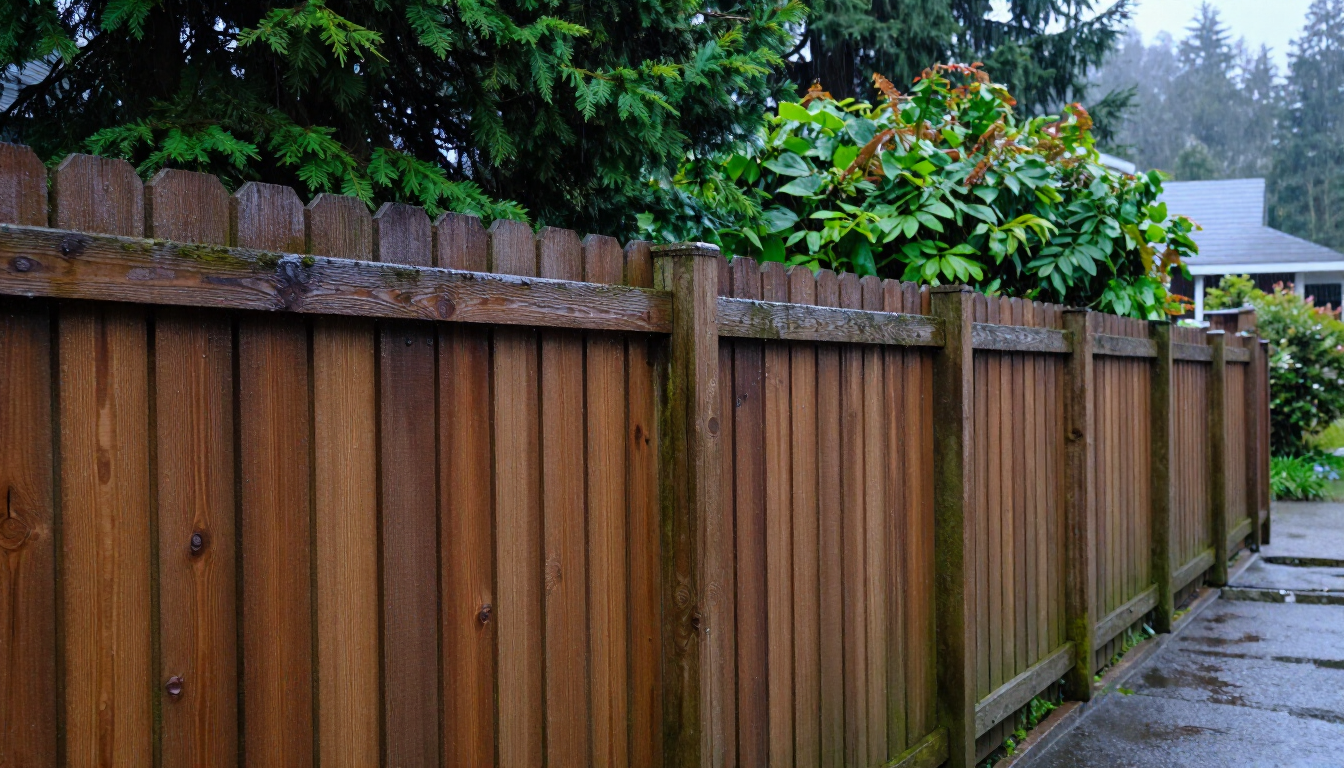
Rot is the number one fence problem in our area. Wood soaks up water. Moisture breaks down the fibers. Soft, dark wood is the first sign.
Rot starts where wood meets the ground. Posts and bottom rails go first. Boards near wet soil or under dripping trees go next.
How to Check for Rot
Push a screwdriver into the wood at the base of a post. If it sinks in easily, rot has set in. Spongy boards and dark stains tell the same story.
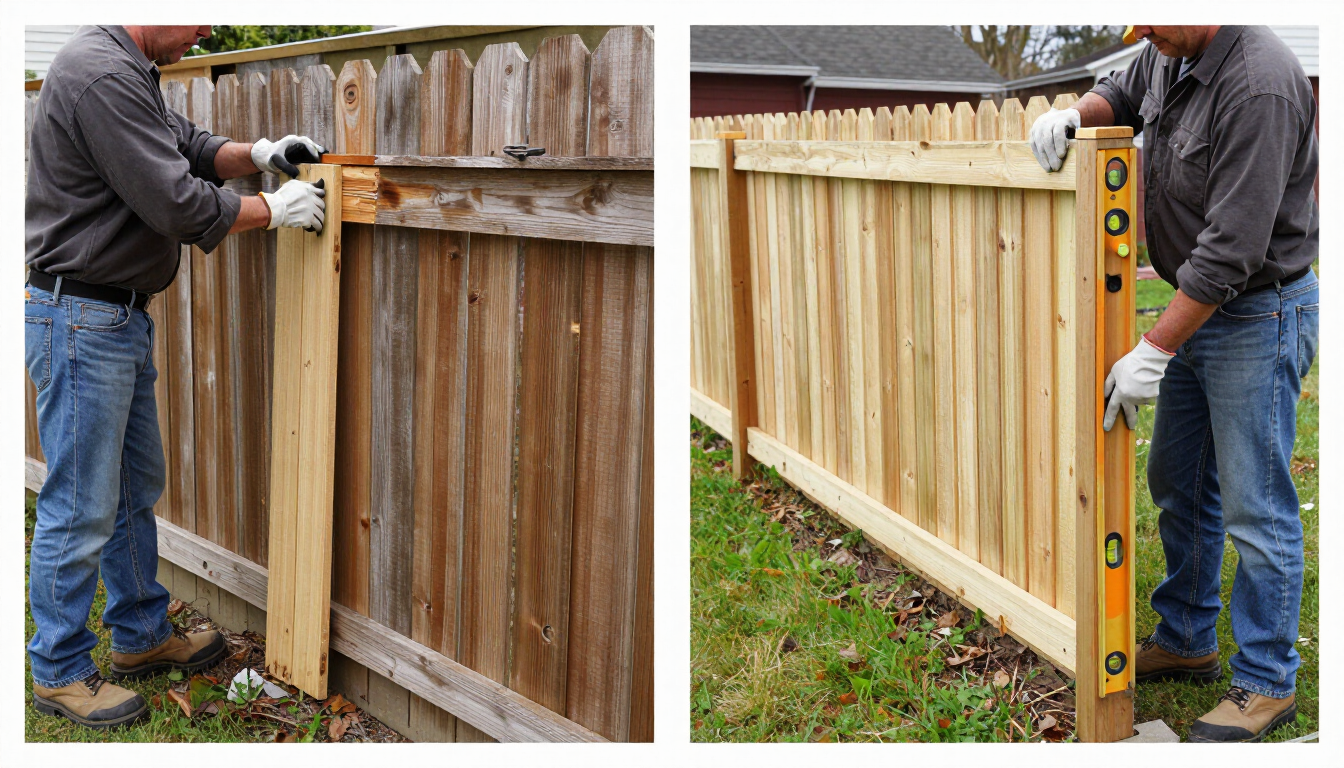
Catch it early and you may only need a post or a few boards. Wait too long and rot spreads down the whole fence.
Leaning and Shifting Posts
Wet soil loses its grip. Months of rain leave the ground soft around post bases. Posts then tilt or sink under the weight of the fence.
Wind makes it worse. A solid fence acts like a sail in a winter storm. The push loosens posts that already sit in mushy ground.
Posts set too shallow fail first. So do posts set without gravel or drainage at the base.
If one post leans, fix it soon. A leaning post pulls on every section beside it.
Warped, Cracked, and Split Boards
Wood swells when it soaks up water. It shrinks when it dries. Our wet winters and dry summers repeat that cycle every year.
Over time, boards cup, twist, and crack. Nails and screws work loose. Gaps open between boards. A privacy fence stops giving privacy.
Sealing or staining the wood every two to three years slows this down. It keeps moisture out and cuts the size of the swings.
Rust on Metal Fences and Hardware
Wet weather and bare metal do not mix. Rust shows up on iron rails, chain link, hinges, latches, and screws.
It often starts at scratches, welds, and post bases. Once it starts, it spreads. Rusty hardware also leads to gate trouble. Hinges seize. Latches stop catching.
Look for galvanized, powder-coated, or aluminum parts. They resist rust far better. Touch up chips in the finish before moisture gets in.
Sagging and Dragging Gates
Gates take the most abuse on any fence. They swing, they carry weight, and they hang on a single post.
When that post softens in wet ground, the gate drops. The latch stops lining up. The bottom corner drags across the dirt or the driveway.
Wet wood also swells. A gate that closed fine in August may stick in December.
Fix a sagging gate early. Heavy use on a dropped gate strains the hinges and the frame around it.
Moss, Mildew, and Green Film
Shady, damp fences grow moss and mildew in our climate. You will see green or black patches on boards, vinyl panels, and posts.
On vinyl and metal, this is mostly a cosmetic issue. A soft brush and a hose usually clear it.
On wood, it matters more. Moss holds moisture against the surface. That speeds up rot. Clean it off each spring and trim plants that block sun and airflow.
Storm Damage From Wind and Falling Debris
Washington windstorms can take down branches, and sometimes whole trees. Even a small limb can crack a rail or knock a panel loose.
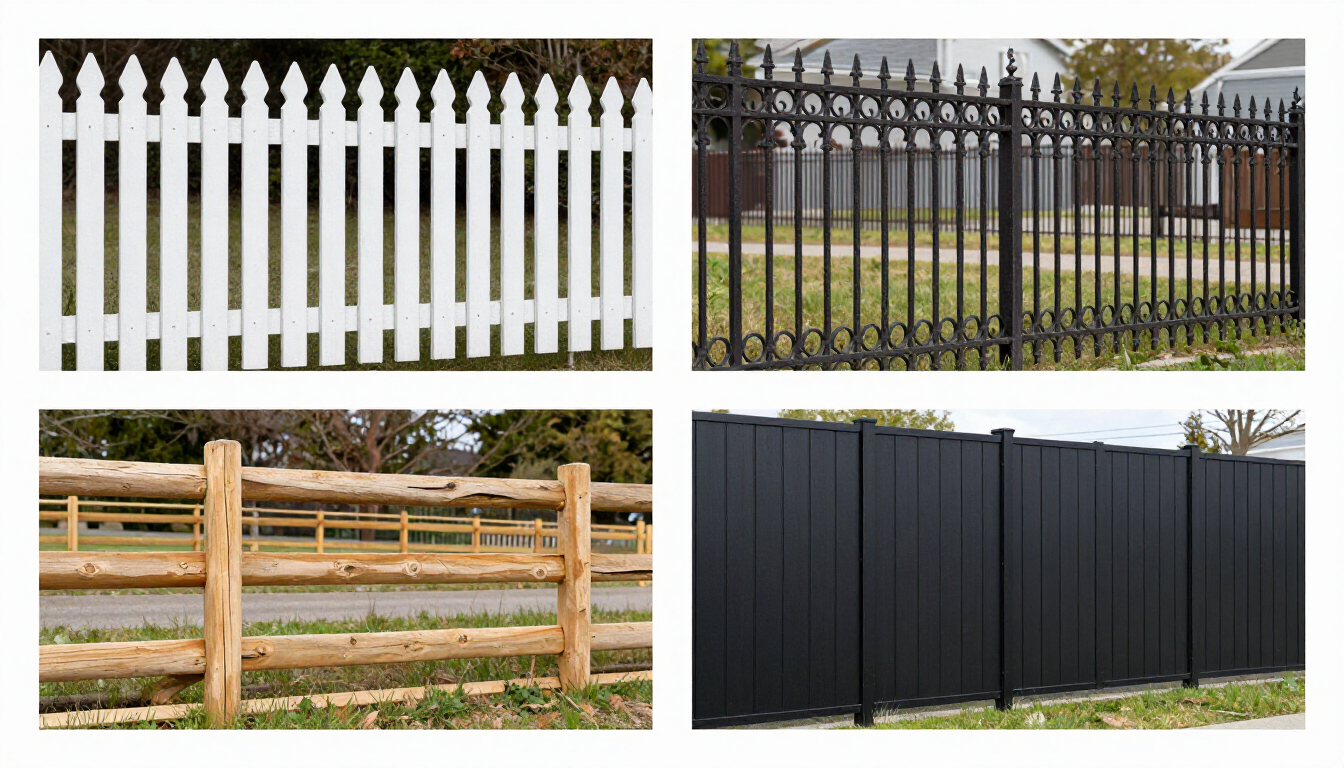
Fences with weak posts or old boards give way first. Solid panels catch the most wind. Open styles, such as shadowbox or aluminum, let air pass through.
After a big storm, walk your fence line. Look for loose sections, cracked rails, and leaning posts. Take photos in case you need to file an insurance claim.
How to Protect Your Fence Through the Wet Season
You can’t stop the rain. You can lower the damage it does.
- Walk your fence each fall and check posts, boards, and hardware
- Keep soil, mulch, and plants away from the base of the fence
- Trim branches that drip on the fence or threaten to fall
- Seal or stain wood fences every two to three years
- Touch up chipped paint or coating on metal fences
- Fix small problems before the next wet season
A little attention each fall saves a lot of money later.
When to Call a Pro
Some problems are easy to handle yourself. Cleaning moss and sealing boards are good examples. Others need a pro. Leaning posts, widespread rot, and sagging gates fall into that group.
Olympia Fencing Company repairs and installs fences across Olympia, Lacey, Tumwater, Yelm, Elma, Rochester, and the surrounding Thurston County area. We’ll walk your fence line, find what’s failing, and tell you whether it needs a repair or a replacement.
Contact us today for a free estimate. We’ll give you a straight answer and a clear plan.
You might also like